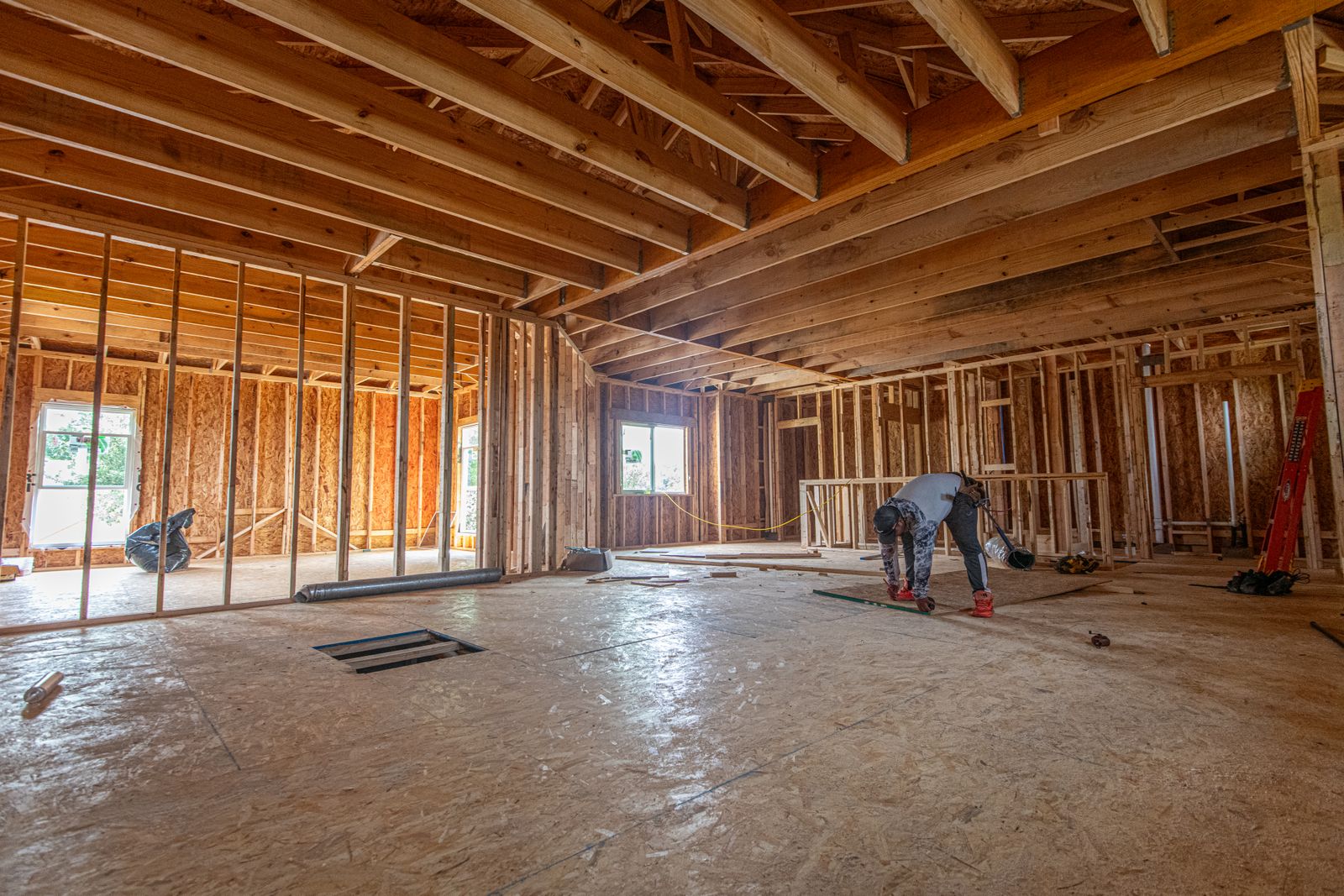
The question comes up on almost every renovation site walk, usually phrased as a hope rather than a question. We are not changing much electrically, so we probably do not need to touch the panel, do we? Sometimes the answer is no. More often, once we have run the numbers, the answer is that the house has been quietly living at the edge of its service capacity for a decade and the renovation is what finally pushes it over.
A service upgrade is not an upsell. It is arithmetic, and the arithmetic is public. The National Electrical Code gives two ways to calculate the load a dwelling places on its service, and the one used most often for existing houses is the optional calculation in Article 220 Part IV. It is straightforward enough that you can do it at a kitchen table.
The calculation, in plain terms
You add up the general lighting and receptacle load, which the code sets at 3 volt-amps per square foot of conditioned floor area. You add two small-appliance branch circuits at 1,500 volt-amps each, and a laundry circuit at another 1,500. You add the nameplate rating of every fixed appliance: range, oven, dishwasher, disposal, water heater, dryer, well pump, hot tub.
Then you apply the demand factor, which is where the code acknowledges that nobody runs everything at once. You take 100 percent of the first 10,000 volt-amps and 40 percent of everything above that. Finally you add the larger of the heating load or the air conditioning load at 100 percent, because those two never run simultaneously. Divide the total by 240 volts and you have your demand in amps.
| House | Conditioned area | Heating | Cooking | Calculated demand |
|---|---|---|---|---|
| 1948 bungalow, unrenovated | 1,450 sq ft | Gas furnace | Gas range | 58 A |
| Same house, renovated | 1,450 sq ft | Gas furnace | Induction range, double oven | 84 A |
| 1978 ranch plus addition | 2,600 sq ft | Gas furnace | Induction range | 97 A |
| 2,600 sq ft with heat pump | 2,600 sq ft | Air source heat pump | Induction range | 131 A |
Scroll the table sideways to see every column.
Sample calculations using the NEC 220.82 optional method. Your figures depend on actual nameplate ratings.
The pattern in that table is the story of the last ten years of renovation. Gas heat and gas cooking keep a modest house comfortably inside 100 amps. Swap the range for induction and add a double oven and you are at 84, which is legal on a 100 amp service but leaves you nothing. Add an electric vehicle charger, a hot tub or a heat pump and you are past it.
The signals that you are already at the limit
- A panel with no empty spaces, and tandem or double-stuff breakers filling the slots that are there
- A main breaker rated at 60, 100 or 125 amps on a house that has been extended or had electric appliances added
- Lights dimming noticeably when the well pump or the air conditioner starts
- A fuse box rather than a breaker panel, or a panel brand that insurers now flag
- Aluminium branch circuit wiring from the mid-1960s to mid-1970s, which is a separate safety issue from capacity
What the work actually is
An upgrade from 100 to 200 amps replaces the service entrance conductors, the meter base, the main panel and the grounding electrode system. On an overhead service the utility drops the connection and reconnects it after the inspection. On an underground service there is usually trenching involved, which is the part that adds days rather than hours.
Inside the house, the new panel gets a full circuit directory, and any circuit that is being reconnected has to meet the current requirements for arc-fault and ground-fault protection. That is the part that surprises people: you cannot simply move forty old circuits across to a new panel unchanged. Bedrooms, living areas, kitchens and laundry areas need AFCI protection, and kitchens, bathrooms, laundry, garages, basements and exterior receptacles need GFCI.
On a renovation this is why we do the panel work during rough-in rather than at the end. The circuits are open, the walls are open, and the incremental cost of doing it properly is a fraction of what it costs to retrofit later.
What it does not fix
A service upgrade gives the house more capacity. It does not repair the branch circuits that were already there, it does not correct undersized neutrals, and it does not do anything about knob-and-tube in the walls or aluminium conductors at the receptacles. Those are separate scopes with separate prices.
It also does not guarantee you will pass inspection on everything else. An inspector standing in front of a newly upgraded panel will look at the whole picture, and rightly so.
The useful thing about the optional calculation is that it turns a vague worry into a number before you spend anything. Run it against the appliances you are actually planning to buy, not the ones you have now. That is the figure that matters, and it is the figure we run on every site walk.